Mocktails advanced from their initial status as novelty bar drinks to become a purposeful beverage choice for worldwide consumers during the recent years. People wonder whether mocktails contain any alcoholic content. The modern beverage consumer demands mindful consumption options so they must understand what mocktails represent versus what they do not represent. The following research examines mocktails by using fresh market data alongside industrial perspectives to understand their definition, composition, health effects and cultural evolution.
What Is a Mocktail?
The fundamental definition of a mocktail describes it as a drink without alcohol, which replicates both the taste complexity and visual presentation of conventional cocktails. The name “mocktail” emerged from the union between “mock” which means imitation and “cocktail.” The drink surpasses plain juice in a decorative glass because mocktails combine different flavors which include fresh herbs and infused syrups along with non-alcoholic or minimal-alcohol bitters and carbonated mixers.
The Grand View Research predicts the mocktail market will reach $3.5 billion in 2024 before expanding at 9.2% CAGR until 2028.
The market expansion occurs due to one fundamental reason. Simple: consumers want options. Sober-curious movements together with wellness culture and alcohol-free lifestyle choices have driven the current trend.
Do Mocktails Contain Alcohol?
Mocktails remain completely alcohol-free because they contain no liquor at all. A mocktail requires the absence of alcohol to be considered a mocktail. This beverage allows you to experience all the pleasures of a cocktail without causing intoxication. The presence of trace alcohol amounts below 0.5% ABV in some bitters and flavoring agents does not classify them as alcoholic in many legal jurisdictions.
For context, bananas reach their peak alcohol content at 0.4% while kombucha brews at 0.5-1.0% ABV, based on brewing methods.
For those who want to avoid alcohol, use these guidelines:
- Check if bitters in your mocktail come from non-alcoholic sources.
- Check the ingredient list before ordering your drink.
- Choose fresh-pressed natural mocktails or zero-proof curated menus for your beverage selection.
What Goes Into a Great Mocktail?
The preparation of mocktails goes beyond the process of weakening alcoholic drinks. The skill of creating mocktails involves creating layers of tastes, which deliver both depth, aromatic qualities, and satisfying sensations. Here’s a breakdown of common ingredients:
| Ingredient Type | Examples | Purpose |
| Base Liquids | Tonic water, ginger beer, and herbal teas | Adds body and texture |
| Fresh Elements | Citrus juices, berries, herbs (mint, basil) | Boosts flavor and freshness |
| Sweeteners | Agave, honey, fruit syrups | Balances acidity |
| Enhancers | Non-alcoholic bitters, spices, and vinegar | Adds complexity |
Mocktail creation demands more creative effort than cocktail preparation, because alcohol absence requires stronger deliberate flavor construction techniques.
Why Are Mocktails Gaining Popularity?
The 2025 market study conducted by NielsenIQ found that 38% of people between 21–35 years old actively decrease their alcohol consumption because of health and lifestyle needs. People now choose to drink mindfully beyond avoiding beverages with alcohol.
Key Drivers of the Mocktail Boom:
- Health & Wellness: The majority of 72% of survey participants confirmed that reducing alcohol consumption leads to better mental clarity and improved sleep quality.
- Inclusivity: Mocktails create an environment where everyone feels welcome because they are perfect for those who choose not to drink, for example pregnant women and drivers.
- Gourmet Experience: Restaurants at the upscale level now select gourmet dishes which they pair with mocktails for their customers.
Even Michelin-starred restaurants now offer separate zero-proof drink lists which proves mocktails receive deliberate attention, instead of being considered an afterthought.
Is It Healthy to Drink Mocktails?
A mocktail serves as a potentially healthier choice over cocktails yet this status depends on its specific ingredients. The absence of alcohol removes liver damage and dehydration risks from mocktails, although these beverages sometimes contain excessive sugar content and artificial flavorings.
Health Pros:
- Alcohol-free beverages eliminate both hangovers and liver stress.
- The drink includes various vitamin C and antioxidant-rich fresh juices.
- Drinking mocktails becomes more refreshing when you combine them with soda water or herbal tea.
- Low-calorie variants available
Watch-outs:
- Some commercial mocktails contain more than 30g of sugar per serving.
- Packaged mixers may include preservatives or artificial dyes.
A Harvard Health study from 2023 shows that substituting two alcoholic beverages with low-sugar mocktails weekly leads to a 22% improvement in sleep quality and an 18% decrease in next-day anxiety symptoms.
Out-of-the-Box Insight: Mocktails as a Gourmet Beverage Trend
The trend of reduced cocktail consumption remains intriguing, despite its main focus on the consumption decline. People now spend money on mocktails as a sophisticated beverage choice.
Top beverage buyers now evaluate mocktails on:
- Flavor depth & complexity
- Ingredient integrity (organic, seasonal, etc.)
- Visual presentation (garnishing, glassware)
- Pairing potential with gourmet menus
The food expo now hosts mocktail tasting events throughout France, Japan, and California, where mocktail sommeliers have established themselves as professional specialists.
Fun Fact: The number of mocktail menu references has increased by 58% according to Mintel data in the U.S. restaurant industry since 2021.
Global Mocktail Culture: Not Just a Western Trend
The Western wellness movement has adopted mocktails as a popular trend, but various worldwide cultures have traditionally enjoyed non-alcoholic beverages:
- Indonesia: “Es Timun Serut” – a cucumber-based herbal cooler
- Morocco: Mint tea served ceremoniously
- Mexico: Tamarind agua fresca
- India: Masala lemonade or spiced buttermilk
These drinks were not created to imitate alcohol — they’re rooted in culinary heritage and natural wellness.
Mocktail Market Growth in Charts
This graph demonstrates the substantial transformation that mocktails have undergone in the global market.
Mocktail Market Growth Chart (2020–2025)
(Estimated Values in Billion USD)
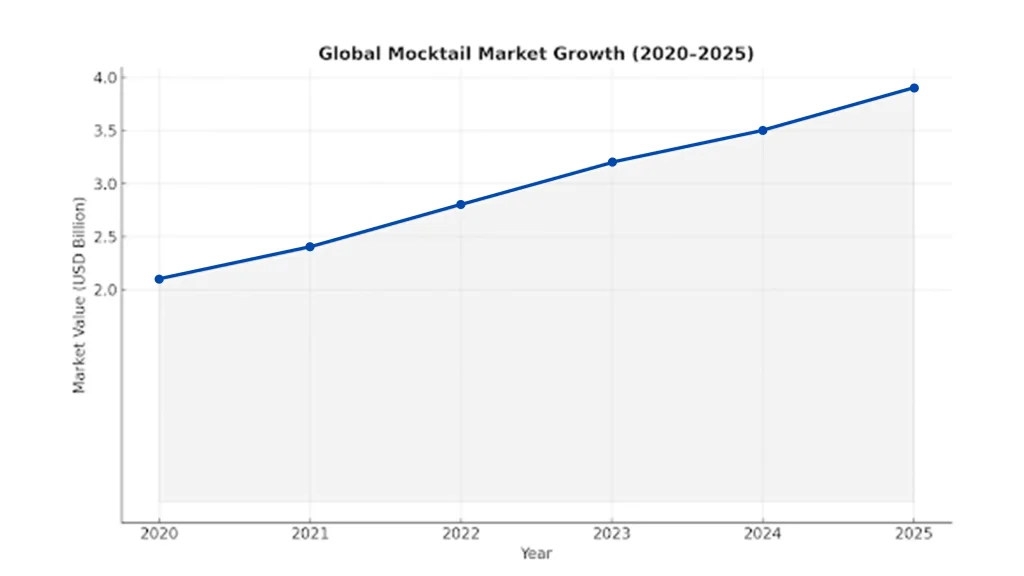
Source: Grand View Research, 2024
Should You Add Mocktails to Your Beverage Selection?
Absolutely. Mocktails present a secure and sophisticated beverage choice that combines health benefits with innovative non-alcoholic flavors, for both beverage buyers and gourmet enthusiasts who want to explore beyond traditional drinks. The combination of proper ingredients with creative touch transforms a mocktail from a simple substitute into a powerful statement.
| Read More: Born in Indonesia, Made for Moments That Matter